
Soar to New Heights with FreeFlight
What is FreeFlight?
FreeFlight is a self-made design system that combines principles from Tailwind and Material within an atomic design structure.
While not intended as a production-ready system, FreeFlight showcases my expertise as a design systems designer—demonstrating my methodology, craft, and approach to building scalable systems.
It incorporates industry-standard practices such as design tokenization, a strong focus on accessibility, and feedback-driven workflows where interface decisions at the product level inform and evolve the design system.
Benefits of a Design System
The purpose of a design system is to create consistency across experiences, interactions, and themes.
By standardizing patterns and components, a design system helps:
Increase speed – Teams move faster by reusing proven solutions.
Improve consistency – Interfaces look and behave the same across products.
Reduce tech debt – Eliminates one-off solutions that slow down development.
Boost performance – Clean, reusable components streamline implementation.
For end users, a design system creates a seamless, intuitive experience. They always know how to interact with elements, what actions are possible, and how to navigate—no matter where they are in the product ecosystem.
With that being said, how FreeFlight is designed from the ground up, how I approach real-life challenges when building and evolving design systems.
Design Principles
FreeFlight was built around four core principles:
Iterative – Components and themes are designed to evolve as new needs emerge.
Flexible – Provides adaptable solutions to interface challenges without being overly bespoke.
Accessible – Prioritizes inclusivity, ensuring usability for all.
Collaborative – Grows through contributions from both designers and developers.
Design System Structure
FreeFlight follows an atomic design structure:
Ions – Design tokens and variables that form the foundation of the theme and components.
Atoms – The simplest building blocks of the interface.
Molecules – Combinations of atoms that create interactive patterns.
Organisms – Complex components formed from multiple molecules and atoms.
Explore FreeFlight
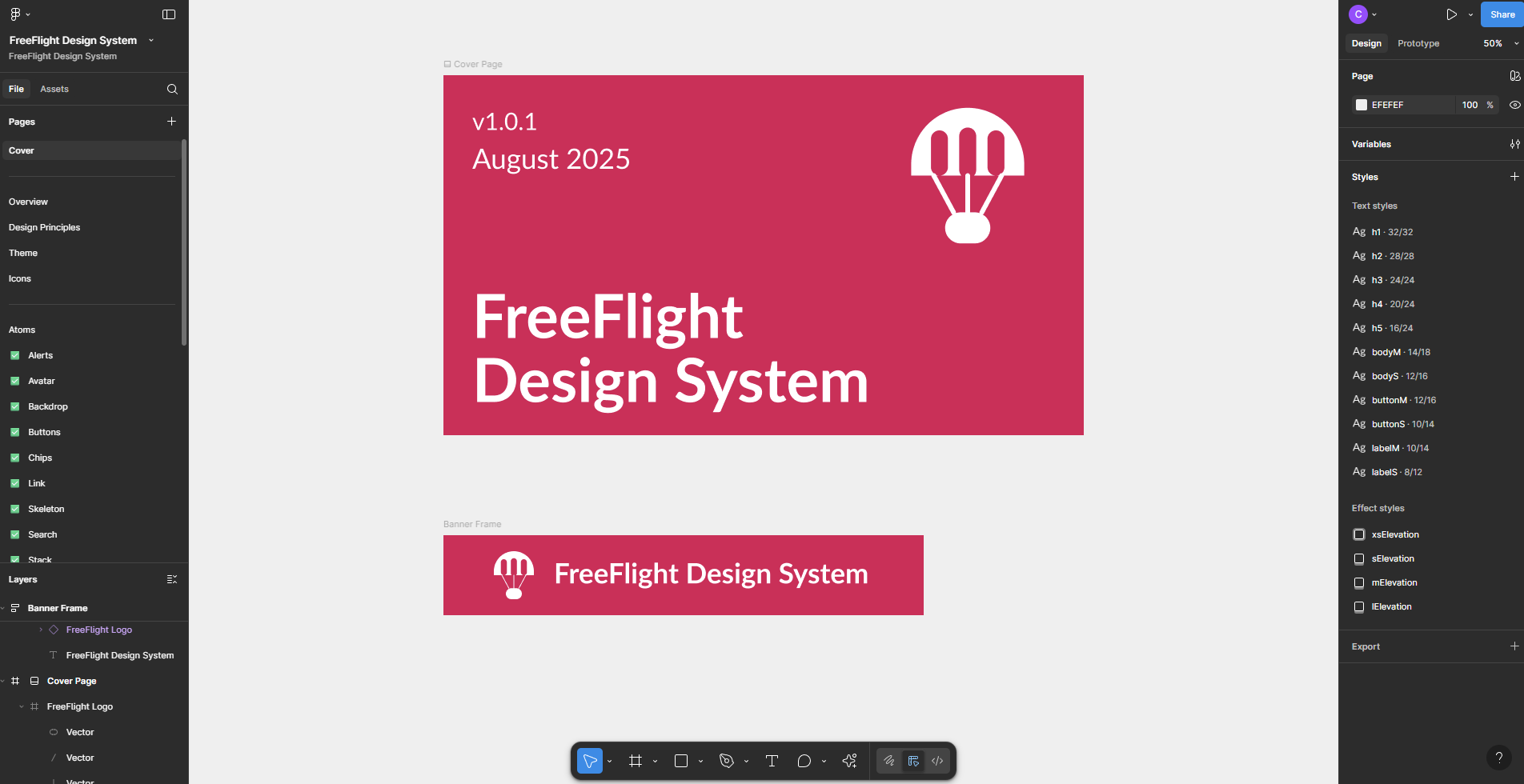
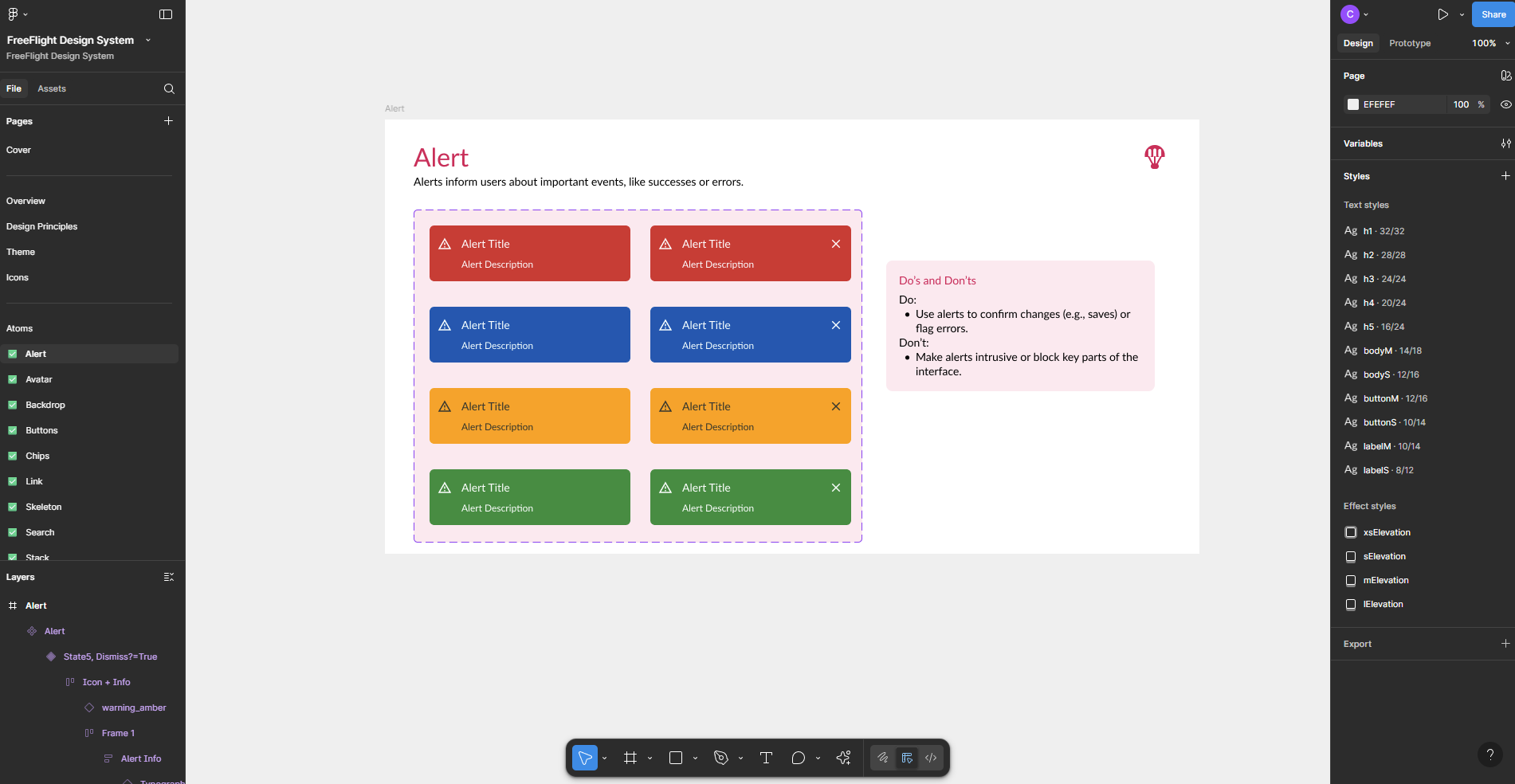
FreeFlight lives in Figma, ready for you to explore. Whether you’re curious about the atomic structure or want to see accessibility built into the foundation, you can browse it all with a free Figma account.